
EPC Construction Phases transform engineering designs and procured equipment into a fully constructed industrial facility. During these phases, engineering documents are implemented on site through civil, structural, mechanical, piping and electrical works. Construction activities follow a defined sequence so that each discipline can progress without interfering with others. Foundations and civil infrastructure must be completed before heavy equipment installation begins, while structural steel erection and underground utilities often advance in parallel. The erection process relies on accurate construction drawings, coordinated material delivery and clear execution planning. When planning and sequencing are properly managed, construction teams can maintain installation accuracy, efficient resource deployment and steady progress toward mechanical completion and commissioning readiness.
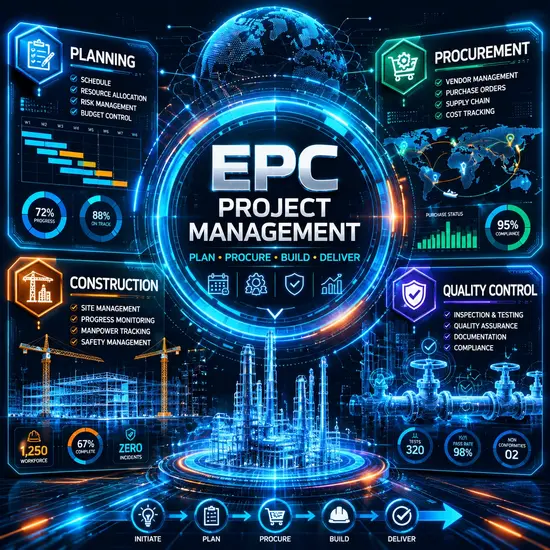
Selecting the right contractor for the EPC Erection process is essential to avoiding delays, rework and coordination issues. OPM Group provides construction and erection services for industrial facilities with a focus on technical accuracy, coordinated project management and controlled site execution.
OPM’s engineering and construction specialists manage complex industrial installations involving heavy equipment, structural steel frameworks and process piping systems. Their experience includes managing multidisciplinary construction environments where different EPC Construction Stages, including civil, mechanical, electrical and instrumentation activities, must progress simultaneously.
The team understands how equipment tolerances, structural loads and piping stresses influence installation procedures. This technical knowledge allows construction crews to perform erection work with precise alignment and reliable mechanical integration.
Construction success in EPC projects depends on coordination between engineering documentation, procurement logistics and field activities across the EPC Construction Phases. OPM Group integrates these functions through centralized project management and digital construction tracking systems.
Site supervisors, planners and engineering teams maintain continuous communication to resolve technical questions and prevent work interruptions. This integration allows construction teams to proceed with accurate drawings, verified materials and clear installation instructions.
Industrial construction projects require strict adherence to safety standards and quality inspection procedures. OPM Group implements detailed quality assurance programs that include material inspections, welding qualification control and structured testing procedures.
Safety management is integrated into daily site operations through risk assessments, toolbox meetings and approved lifting procedures. These practices support a controlled and well‑coordinated EPC Erection process while protecting worker safety and maintaining installation integrity.
Before construction work begins, EPC contractors must mobilize resources and prepare the project site for large‑scale industrial activities. Mobilization ensures that equipment, personnel and logistics systems are available before physical construction activities begin.
At this stage of the EPC construction process, project teams establish site infrastructure, including temporary facilities, material storage areas and logistics routes. These arrangements allow materials, heavy equipment and construction crews to operate efficiently throughout the project duration.
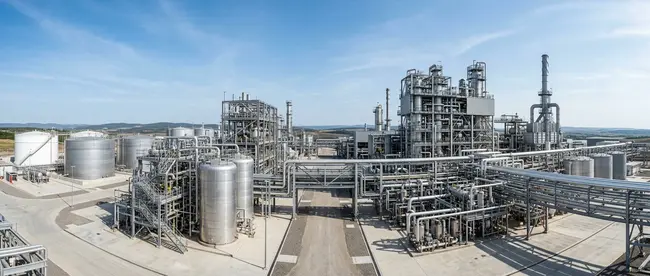
Mobilization begins at the start of the EPC Construction Phases with the transport of construction equipment, cranes and site machinery to the project location. Skilled personnel such as supervisors, engineers, welders and rigging teams are assigned to the project according to the construction schedule.
Workshops, material storage areas and equipment yards are established to support ongoing field activities. Proper organization of these resources prevents delays when installation work begins.
Site preparation includes clearing vegetation, removing debris and leveling construction zones. Access roads and transport routes are also developed to support heavy equipment deliveries.
Temporary offices, worker facilities and material warehouses are constructed to support daily operations. These installations allow project teams to coordinate engineering documentation, material tracking and construction supervision directly from the site.
Safety planning begins before physical construction work starts. Project teams perform hazard assessments to identify risks associated with excavation, lifting operations and equipment installation.
Site safety plans define emergency procedures, worker protection requirements and restricted areas for heavy lifting operations. Early coordination between contractors and site supervisors ensures that all construction activities follow the same safety framework.
Civil construction establishes the structural base on which all other installation activities depend. Foundations, underground utilities and structural platforms must be completed accurately before equipment erection begins.
Civil works within EPC Construction Stages include excavation, soil preparation, reinforcement installation and concrete placement for foundations that support heavy industrial equipment.
Excavation begins with soil removal according to foundation design depths and structural requirements. Grading ensures that the site surface maintains proper drainage and stable working areas for construction equipment.
Soil compaction and stabilization techniques are applied when ground conditions require additional support for heavy structures.
Reinforced concrete foundations support large equipment such as reactors, compressors and storage tanks. These foundations must meet strict tolerance levels to ensure proper equipment alignment during installation.
Anchor bolts and embedded plates are installed during concrete placement to allow precise mechanical equipment positioning later in the EPC Erection process.
Quality inspections verify reinforcement placement, concrete strength and dimensional accuracy before foundations are approved for equipment installation. Testing procedures include concrete sampling, reinforcement verification and survey measurements.
Accurate foundation construction prevents alignment problems during later stages of EPC Construction Stages.
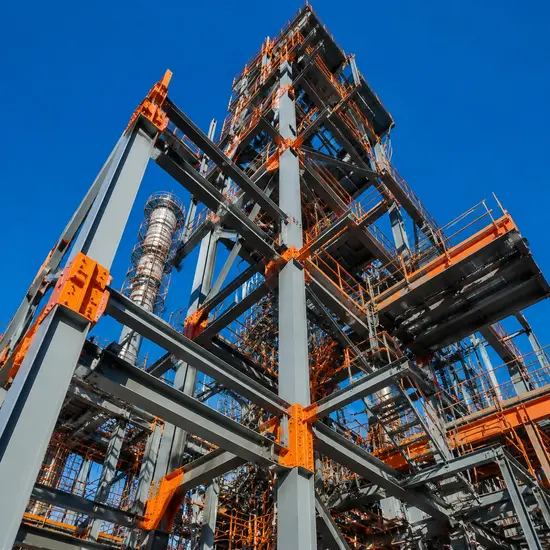
Structural steel systems provide the framework that supports equipment platforms, piping racks and industrial structures throughout the EPC Construction Phases. Steel erection requires careful coordination between fabrication workshops and site installation teams.
Structural steel components are fabricated in specialized workshops according to detailed structural drawings, material specifications and applicable fabrication standards. Each member is cut, shaped and welded with controlled procedures to achieve the required dimensions and load‑bearing capacity. During fabrication, connection plates, stiffeners and pre‑drilled bolt holes are prepared so that the elements can be assembled efficiently during site erection. Surface preparation and protective coatings are also applied to protect the steel from corrosion during transport and operation.
During erection, cranes lift structural components into position where crews secure them with bolts or field welds. Alignment checks ensure that columns, beams and structural frames remain within specified tolerances.
Correct alignment allows equipment and piping systems to be installed without dimensional conflicts.
Structural inspections confirm that welding quality, bolt torque values and structural stability meet engineering requirements. These verification steps support a reliable EPC Erection process and help ensure that structural components are installed according to engineering specifications. Non destructive testing methods may also be applied to verify weld integrity.
Mechanical installation involves positioning and assembling the main process equipment within the facility. Equipment installation must follow strict procedures to maintain operational reliability.
Major equipment such as pumps, compressors, vessels and heat exchangers are installed using lifting plans that define crane capacity, rigging configurations and installation sequences.
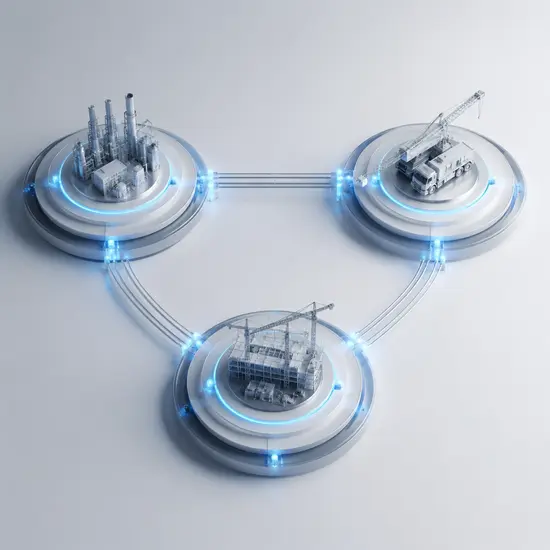
Positioning of major mechanical equipment begins after foundation dimensions, anchor bolt locations and elevation levels are verified through site surveys. Heavy lifting cranes and rigging systems are used to place equipment such as compressors, pumps, vessels, or heat exchangers onto prepared foundations. Installation teams then secure the units to anchor bolts and structural supports according to manufacturer specifications. Precise placement is essential because even small deviations can affect coupling alignment, load distribution and long‑term operational stability of rotating equipment.
After equipment placement, alignment procedures are performed as part of the EPC Construction Phases to ensure that shafts, couplings and rotating assemblies are positioned within the tolerances specified by the manufacturer. Laser alignment systems are commonly used because they provide precise measurements and allow technicians to correct small angular or offset deviations. Once alignment is verified, equipment is fixed to the foundation by tightening anchor bolts according to defined torque values. Calibration then follows for connected instruments and monitoring devices, ensuring that pressure gauges, sensors and control interfaces provide accurate readings during operation and commissioning.
Mechanical systems must be integrated with piping networks, electrical power distribution and instrumentation controls before the facility can operate reliably. This integration requires coordinated installation sequences and interface checks between mechanical, electrical and control teams. Flange connections, cable terminations and signal interfaces are verified to ensure compatibility with design specifications. During the EPC Erection process, structured coordination meetings and inspection checkpoints help prevent clashes, misalignment, or incomplete connections, reducing rework before pre‑commissioning begins.
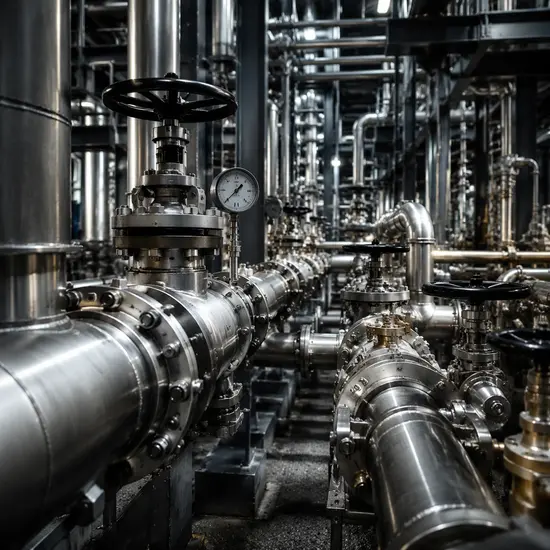
Industrial facilities rely on extensive piping systems that transport fluids, gases and process materials between equipment units. Piping installation is therefore one of the most complex EPC Construction Stages.
Piping fabrication workshops manufacture pipe spools according to isometric drawings and material specifications. Welding, cutting and fitting are completed under controlled workshop conditions.
Prefabrication improves installation speed and reduces welding work required on site.
Pipe spools are transported to the site where installation teams assemble them according to routing plans. Welding procedures follow approved welding specifications and welder qualification standards.
After installation, piping systems undergo hydrostatic or pneumatic testing to verify structural integrity. These tests confirm that weld joints and connections can withstand operational pressures.
Electrical teams install transformers, switchgear units and distribution panels that supply power to the entire facility. Cable trays and grounding systems are also installed during this stage.
Instrumentation devices measure temperature, pressure, flow rate and other process variables. These devices connect to control systems that regulate plant operations.
Electrical cables are routed through trays or conduits and terminated at equipment panels and control cabinets. Testing procedures verify insulation integrity and electrical continuity.
Cleaning procedures remove debris, welding residue and contaminants from piping and equipment systems. Mechanical completion confirms that all construction tasks are finished according to project documentation.
Equipment components such as valves, motors and instrumentation devices undergo functional tests to confirm operational readiness.
Documentation packages, test records and inspection reports are prepared for commissioning teams. These records confirm that installation work meets engineering specifications.
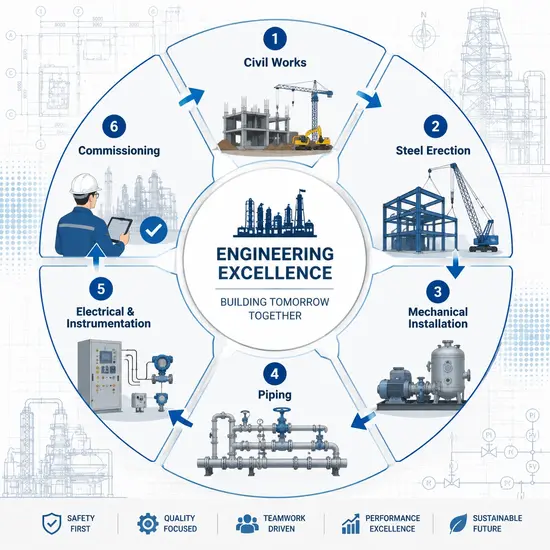
Commissioning and start-up bridge the gap between construction completion and full facility operation. During this final phase, project teams verify that all integrated systems perform according to design requirements under actual operating conditions. This systematic approach identifies potential performance gaps early, ensuring the facility is safe, stable and ready for commercial production.
The process follows a structured methodology to ensure a seamless transition:
At OPM Group, we deliver comprehensive PMC tailored to ensure the successful execution of complex industrial and infrastructure projects.Our expertise spans from the bidding stage through to project completion, providing robust support at every phase.
Stay updated with the latest security trends offers by subscribing to our newsletter.
Copyright © 2025 All Rights Reserved.