
Establishing a new data center demands strategic foresight and precise technical planning. Every design choice influences long-term reliability, operational costs and energy efficiency. The best data center infrastructure combines site stability, scalable architecture and secure networking into one cohesive ecosystem. Modern facilities must align with global data center design standards while adapting to regional conditions and business models. The goal is not only operational functionality but also the ability to evolve as technologies and workloads expand. Below are the core factors that determine the performance and resilience of an advanced data center environment.
The first and perhaps most strategic step in building a data center is selecting the right location. Environmental conditions—such as seismic stability, flood risk and temperature range—directly affect operational continuity and cooling demand. Even small geographic misalignments can lead to significant increases in energy consumption or downtime risk. Reliable access to power and network infrastructure is another determinant. Proximity to urban centers is a standard data center features that reduces network latency, though it often entails higher real‑estate expenses and more stringent compliance obligations.
Local regulations, tax incentives and renewable energy availability often tilt the balance between otherwise comparable regions. Transportation logistics also need consideration, as heavy equipment deliveries require clear routes and stable ground conditions. Strategic site selection transforms the data center from a facility into a long-term operational asset. A comprehensive environmental and regulatory analysis of data center infrastructure before finalizing the site selection is essential to ensure long‑term sustainability, regulatory compliance and consistent uptime.

Determining the capacity of a data center requirements more than estimating current workloads. It involves projecting data growth, application demands and evolving technologies over multiple years. Misjudging these dynamics can force premature expansions or leave valuable resources underused. Power density per rack, total floor space and airflow volumes are measurable elements that tie directly to design efficiency.
Modern planning should consider modular buildouts to expand capacity in predictable increments. Predictive modeling tools help translate business projections into physical requirements, aligning technical design with corporate growth trajectories. Capacity planning intertwines with both financial forecasting and operational continuity, ensuring that capital spending corresponds to actual performance gains rather than speculative overbuild.
True scalability allows a facility to accommodate rising workloads without costly overhauls. In practice, scalability begins with modular planning—each deployment phase completes a functional unit capable of integrating into the next. This modular approach permits adding servers, cooling systems, or network gear independently while maintaining consistent performance.
Scalability relies on adaptable cabling systems, high-capacity power routing and intelligent monitoring platforms. The structural layout of the data center infrastructure must support increased floor loads, while power and cooling systems should scale proportionally with growing IT demand to maintain reliability and operational efficiency.. When these design decisions follow recognized data center design standards, expansion becomes predictable, economical and minimally invasive.
By entrusting your data center projects to the OPM team, you can achieve optimal results thanks to their expertise in scalability.
For detailed information about project terms and conditions, please contact +1 437 288 7491 for the Canada office or +49 176 806 78446 for the Germany office.

A resilient data center minimizes the impact of component failure through redundancy. Redundancy extends beyond hardware duplication—it entails a design where critical functions remain uninterrupted even if primary systems shut downPower systems designed in N+1 or 2N configurations, dual cooling circuits, and multiple carrier networks exemplify effective redundancy and fully align with critical data center requirements for high availability and fault tolerance.
Reliability, however, depends equally on testing and operational discipline. Scheduled failover testing and automated monitoring are standard data center features that validate system responsiveness and detect anomalies early, preventing escalation and ensuring continuous operational stability. Adherence to certifications like Tier III or Tier IV provides measurable assurance that the facility meets high availability parameters. Redundancy, when combined with operational rigor, guarantees consistent uptime across service cycles.
Power planning defines both the stability and sustainability of a data center infrastructure. Facilities typically draw from dual grid connections or maintain on-site generation backups, supported by UPS systems that ensure seamless transitions during outages. Every component—from switchgear to rack-level PDUs—must be rated to handle future load growth.
Energy efficiency considerations now dominate power design. Integration of renewable sources and intelligent distribution software optimizes consumption while reducing emissions. Real-time power analytics identify imbalances and inefficiencies early. Designing for long‑term power flexibility not only protects uninterrupted operations but also aligns with evolving data center requirements and global energy sustainability trends.
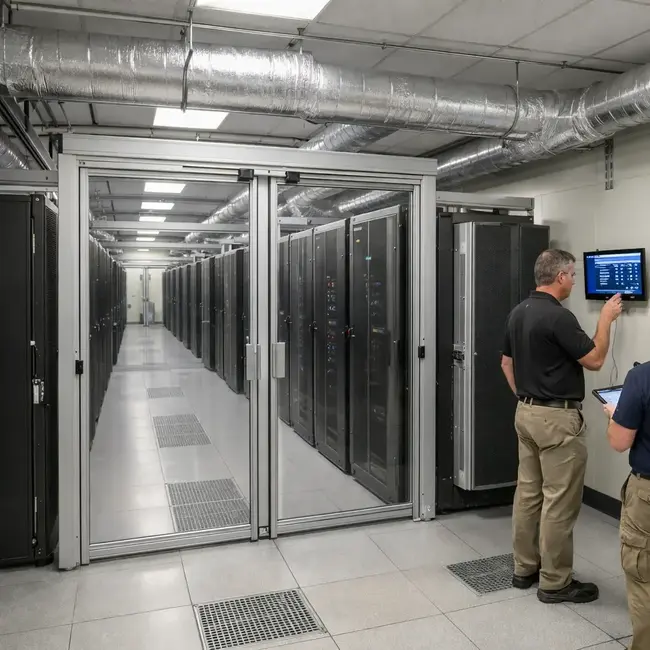
Thermal regulation represents a significant portion of overall energy consumption in data center infrastructure, making efficient cooling strategies critical to operational sustainability and cost optimization. Advanced cooling methods such as liquid immersion, rear-door heat exchangers and economizer systems can drastically lower operational costs. Selecting a cooling solution should depend on both climatic conditions and planned power density.
Hot and cold aisle containment remains a baseline approach, but automation through sensors and AI-driven management systems brings greater precision and adaptability. Modern designs follow energy benchmarks that define acceptable cooling efficiency ratios. These strategies collectively preserve equipment longevity while lowering the total cost of ownership.
Physical infrastructure includes all structural and mechanical frameworks that support data center operations. Raised floors, containment systems, and cable pathways must be engineered for flexibility, scalability, and long‑term durability to meet evolving data center requirements. Additionally, the physical building envelope should comply with regional fire‑resistance and seismic standards to ensure operational resilience and regulatory compliance.
A modular construction approach accelerates data center deployment timelines and streamlines future scalability. Integrating advanced systems for vibration monitoring, humidity control and air filtration significantly enhances data center infrastructure reliability. When physical structures are fully aligned with electrical and mechanical systems, the data center environment consistently maintains optimal operating conditions for mission‑critical hardware.
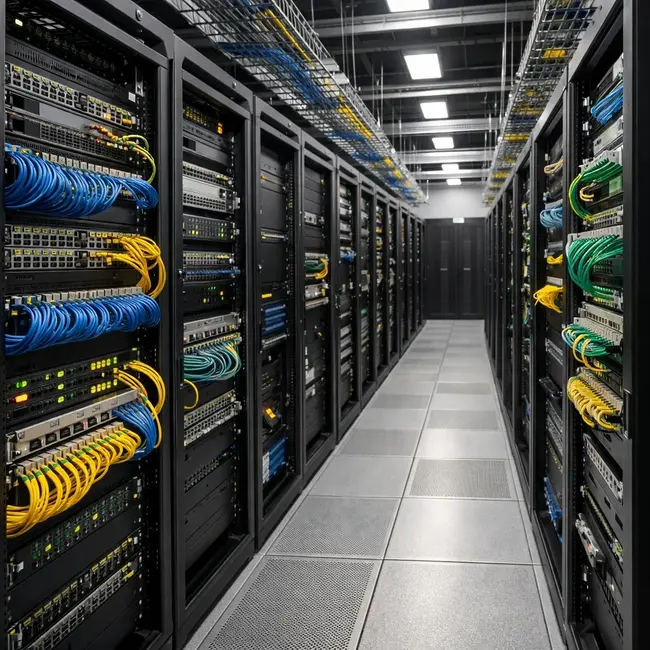
Networking forms the digital backbone that enables connectivity across systems. Designing redundant fiber paths, diverse carrier access and balanced switch fabric reduces latency and single points of failure. The decision between a spine-leaf and traditional three-tier design depends on scalability needs and traffic distribution models.
Network infrastructure should allow for rapid deployment of new circuits and smooth load balancing. Documentation and structured cabling standards facilitate maintenance and fault isolation. Network monitoring and traffic segmentation protect traffic integrity across distributed environments, ensuring stable and secure communication under peak demand while meeting critical data center requirements for performance, availability, and reliability.
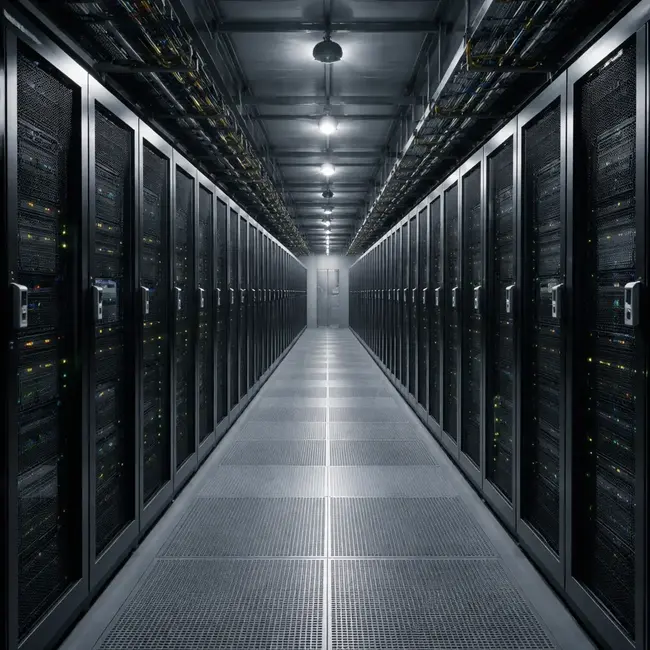
Physical and cyber security must function as a unified control framework within data center infrastructure. On the physical layer, perimeter barriers, biometric access points and multi‑factor entry authentication establish a hardened security perimeter. Comprehensive surveillance systems, supported by redundant power supplies and recording mechanisms, eliminate blind spots and ensure continuous monitoring even during power outages.
Cyber defense mechanisms include network segmentation, intrusion detection and zero-trust architecture principles. Regular vulnerability audits and ongoing staff training are standard data center features that ensure continuous compliance, security awareness, and operational readiness. When both physical and digital layers integrate, they establish a closed security posture that safeguards infrastructure, data and user trust consistently.
Compliance transforms technical excellence into verifiable trust. Standards such as TIA-942, ISO 27001 and Uptime Institute’s Tier ratings outline measurable expectations for reliability, safety and data protection. Meeting these standards requires documented operating procedures, tested redundancies and consistent performance audits.
Compliance also evolves with local legislation, data residency requirements and environmental laws. A proactive compliance strategy aligned with evolving data center requirements includes ongoing policy reviews and independent third‑party certifications, clearly demonstrating regulatory accountability and governance transparency to stakeholders. Aligning design and operation with regulatory frameworks ensures both legal integrity and competitive advantage in global markets.
OPM Group’s planning framework integrates environmental, financial and technological assessments before any physical design begins. This reduces project risks and ensures that the final data center infrastructure operates with both efficiency and resilience. Their consultants evaluate every influence—geography, regulation and energy dynamics—to define a foundation suited for long-term operational stability.
The company’s expertise spans all phases of data center design and construction—from conceptual planning to commissioning. Unified project management minimizes technical misalignments and schedule delays. OPM Group’s teams adhere to international best practices and verified data center design standards, ensuring every element of the facility performs cohesively under integrated supervision.
Each OPM Group project follows a structured, results-driven methodology supported by data validation, quality checkpoints and transparent reporting. This disciplined approach allows predictable delivery timelines and measurable performance indicators. Their experience ensures every aspect of the data center infrastructure aligns with operational goals and adapts seamlessly as technology evolves.
At OPM Group, we deliver comprehensive PMC tailored to ensure the successful execution of complex industrial and infrastructure projects.Our expertise spans from the bidding stage through to project completion, providing robust support at every phase.
Stay updated with the latest security trends offers by subscribing to our newsletter.
Copyright © 2025 All Rights Reserved.