
Renewable energy projects are no longer experimental initiatives; they are capital-intensive, technically complex systems that must perform reliably over decades. As global demand for clean energy grows, project developers, investors, and governments are placing higher expectations on delivery schedules, cost control, and long-term performance. The challenges in renewable energy projects are therefore not abstract concepts but practical obstacles that can decide whether a project succeeds or fails. Understanding these challenges in detail allows project stakeholders to make informed decisions, allocate resources effectively, and design systems that are resilient under real operational conditions. In this article, OPM Group, as a specialist in project management, examines these challenges from a project management perspective.
If you need more information about different types of renewable energy projects, you can also explore related resources on our website.
Renewable energy projects involve long planning horizons, interdependent technical systems, and multiple stakeholders with competing priorities. Ignoring or underestimating challenges often leads to cascading effects such as cost overruns, delays, or reduced output.
Understanding the challenges in renewable energy projects matters because it shapes decisions at every phase, from site selection and technology choice to contracting strategy and operational planning. Early recognition of constraints allows project managers to integrate mitigation measures into the baseline plan, rather than reacting after problems emerge.
From a project management standpoint, challenges should be treated as variables that can be assessed, quantified, and controlled. This approach shifts renewable projects from being risk-heavy ventures to structured investments with managed uncertainty.
Long-term sustainability in renewable energy is not guaranteed by clean technology alone. It depends on whether the project can maintain technical performance, financial viability, and regulatory compliance throughout its lifecycle.
A systematic assessment of Renewable Energy Project Challenges helps identify failure points that may only appear years after commissioning. For example, underestimated grid constraints or poorly planned maintenance strategies can gradually erode revenue. Addressing these issues at the planning stage supports not only environmental goals but also asset longevity and stable returns.
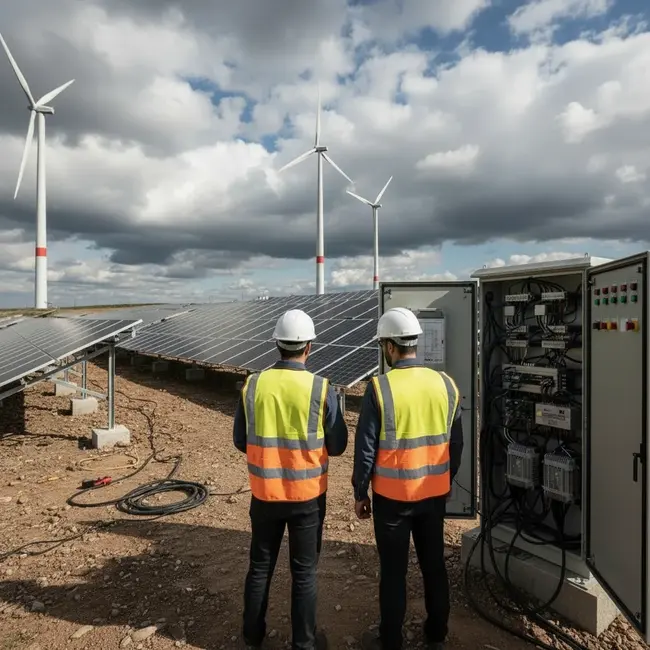
Technical complexity is one of the defining characteristics of renewable energy developments. Unlike conventional power plants, renewables often rely on variable resources and decentralized generation, which introduces unique technical constraints.
Grid integration remains one of the most persistent challenges in renewable energy projects. High penetration of variable energy sources such as wind and solar can destabilize existing grids that were designed for centralized, controllable generation.
Key technical challenges include:
From a project management perspective, grid studies and coordination with transmission operators cannot be treated as administrative steps. They are critical technical activities that influence system design, investment decisions, and commissioning timelines.
Not all renewable technologies carry the same level of maturity. While onshore wind and photovoltaic systems are well established, new turbine models, advanced storage solutions, or hybrid systems may lack long-term performance data.
Managing these challenges requires careful technology selection, contractual performance guarantees, and realistic production modeling based on conservative assumptions rather than optimistic projections.
Financial viability is central to the success of renewable energy projects. Even technically sound projects can fail if financial risks are poorly managed.
One of the most cited challenges in renewable energy projects is the high upfront capital requirement. Equipment procurement, grid connection, land development, and permitting costs are concentrated in the early phases, long before revenue is generated.
Financing barriers often arise due to:
Effective project management aligns technical scope with financing structures, ensuring that design decisions do not unintentionally increase capital costs or reduce lender confidence.
Renewable energy revenue streams are sensitive to multiple external factors, including energy prices, policy changes, and resource availability. These variables make return on investment calculations complex and sometimes volatile.
Renewable Energy Project Challenges Related to ROI Include :
Robust financial modeling and continuous performance monitoring are essential tools for managing these uncertainties throughout the project lifecycle.
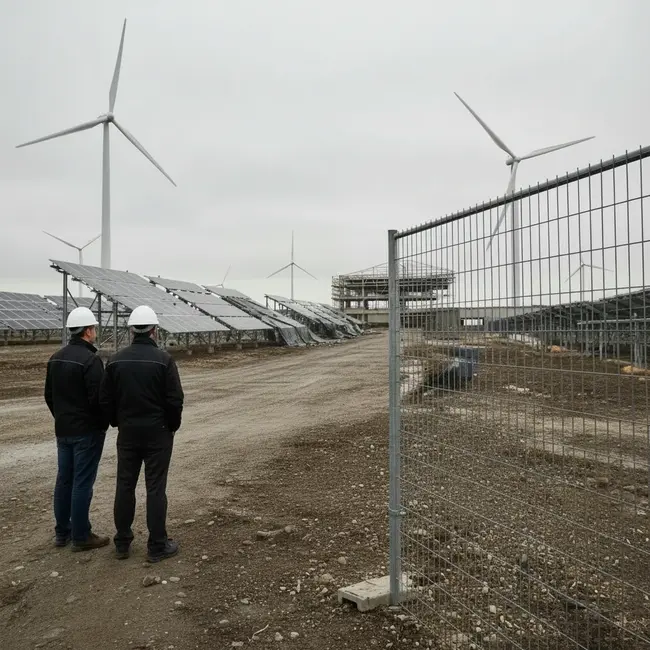
Regulatory environments play a decisive role in renewable energy deployment. While supportive policies can accelerate growth, inconsistency or uncertainty can severely disrupt projects.
Renewable energy projects often depend on government incentives, tariffs, or tax structures. Sudden changes to these mechanisms represent a significant challenge, particularly for projects under development or early operation.
Project managers must incorporate policy risk analysis into feasibility studies and structure contracts to distribute risk appropriately among stakeholders.
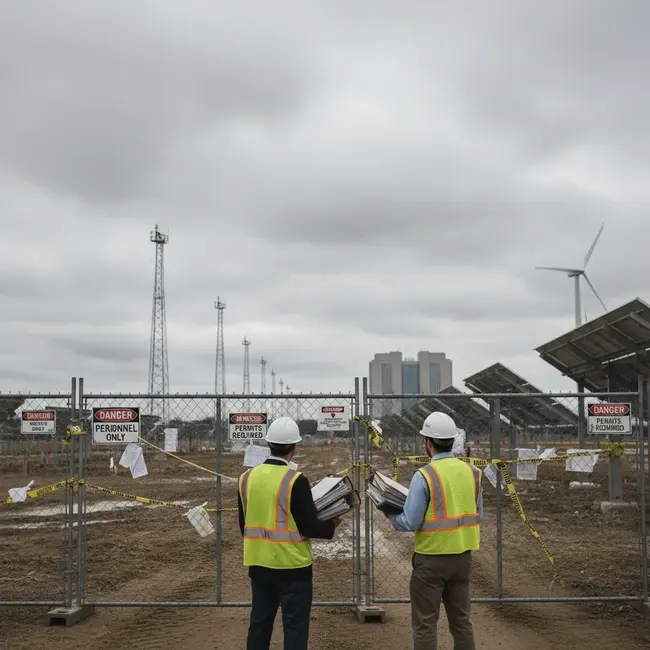
Permitting delays are a frequent source of schedule overruns. Environmental assessments, land-use approvals, and grid connection permits often involve multiple authorities with overlapping responsibilities.
These delays are not only administrative challenges but also financial risks, as extended timelines increase development costs and can jeopardize financing agreements. Proactive stakeholder engagement and clear permitting strategies are therefore essential components of effective project management.
Site conditions directly influence design complexity, construction costs, and operational efficiency. Environmental constraints are not obstacles to sustainability but factors that must be integrated intelligently into project planning.
Environmental and site-related challenges in renewable energy projects include:
Addressing these issues requires multidisciplinary coordination between engineers, environmental specialists, and project managers to ensure compliance without compromising project feasibility.
In a wind power project located on a site with complex geotechnical conditions, limited early-stage site investigations led to foundation designs that did not fully account for soil variability. During construction, this resulted in design revisions, cost overruns, and schedule delays. In parallel, biodiversity protection requirements—specifically related to bird migration corridors—were not adequately integrated into the initial project planning, triggering additional permitting constraints after construction had begun. From OPM Group’s perspective, early multidisciplinary coordination between geotechnical engineers, environmental specialists, and project managers is essential. By integrating environmental and site-related constraints into design development and project controls from the outset, regulatory compliance can be achieved without compromising project feasibility, cost predictability, or delivery timelines.
As global demand for renewable technologies increases, supply chains are under growing pressure. Delays in equipment delivery or shortages of key materials can disrupt carefully planned schedules.
Certain components, such as high-capacity transformers or specialized turbines, have long manufacturing lead times. Supply chain challenges in renewable energy projects can result from:
Mitigating these risks involves early procurement planning, supplier qualification, and contractual provisions for delay management.
Many renewable energy resources are located far from existing infrastructure. Transporting large components to remote or difficult terrain presents unique logistical challenges.
From a project management perspective, transportation planning must be integrated with construction sequencing to avoid idle time, cost escalation, or damage to critical equipment.
From the perspective of OPM Group, the operational and maintenance phase ultimately determines whether a renewable energy project delivers its intended value and achieves long-term performance objectives. Even the most advanced renewable technologies can fail to meet expectations without robust O&M strategies, structured monitoring systems, and effective operational governance.
Key operational and maintenance renewable energy project Challenges include:
OPM Group emphasizes a lifecycle-oriented project and asset management approach, focusing on clearly defined maintenance strategies, targeted workforce training, and the establishment of key performance indicators (KPIs). These KPIs are designed to align operational performance with long-term asset management objectives, system reliability, and the sustainable maximization of investment returns.
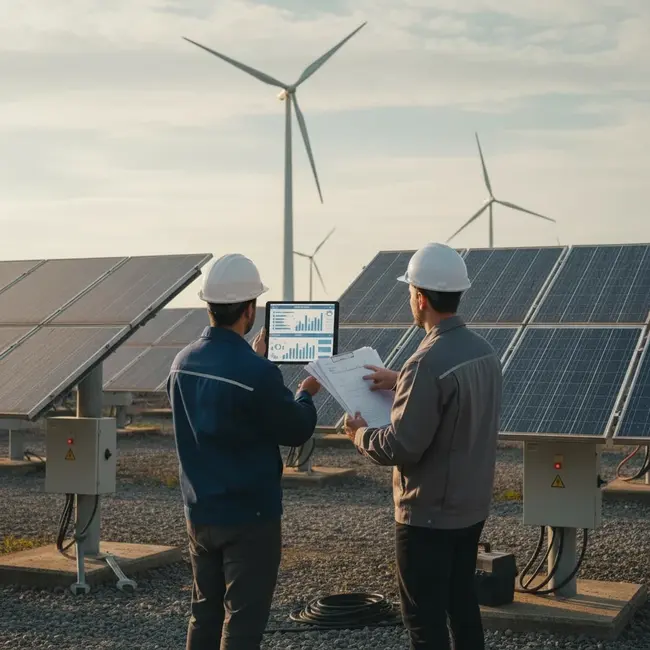
Risk management is not a standalone task but an ongoing process that spans the entire project lifecycle.
Weather dependency is one of the most complex challenges of renewable energy projects because it directly affects energy production without being fully predictable or controllable. Variations in wind speed, solar irradiation, and seasonal patterns can create gaps between forecasted and actual output, which in turn influence cash flow, grid reliability, and contractual performance commitments. Effective management of this challenge requires more than historical averages; it depends on probabilistic resource assessment, conservative yield assumptions, and continuous performance monitoring. When resource variability is integrated into planning and operations through adaptive forecasting models and responsive operational strategies, projects can maintain stability despite natural fluctuations and reduce long‑term financial and technical exposure.
Technical degradation, component failure, and evolving financial conditions all pose long-term risks. The challenges in renewable energy projects are dynamic, requiring periodic reassessment rather than one-time analysis.
A structured risk register, continuously updated throughout operation, enables proactive intervention before issues escalate into major losses.
Quality management in projects plays a critical role in ensuring that renewable energy assets perform as intended throughout their operational life, not just at commissioning. It involves defining clear quality standards, verifying compliance at each stage of design and construction, and documenting processes to support traceability and accountability. In renewable energy projects, weak quality control often leads to hidden defects that surface during operation and increase maintenance costs or reduce efficiency. By integrating quality management into project governance, teams can prevent rework, align contractors with performance expectations, and protect long-term value without adding unnecessary complexity or cost.
In a utility-scale solar power project, if quality control of inverters and electrical connections is limited to the commissioning phase, minor installation defects may remain undetected. Over time, these issues can lead to reduced energy output, unplanned outages, and higher maintenance costs. By implementing quality management throughout the project lifecycle—such as stage-gate inspections, performance testing, and comprehensive documentation—potential defects can be identified and corrected early, ensuring reliable operation and protecting long-term asset value.
Overcoming the challenges in renewable energy projects requires integration, not isolated solutions. Technical, financial, regulatory, and operational aspects must be managed within a unified project framework.
Key strategies include:
As a project management company actively working in the energy sector, we apply structured methodologies to manage these challenges holistically. By collaborating with our team, project owners gain access to coordinated planning, risk control, quality management, and operational oversight that address the full spectrum of renewable project challenges, from concept to long-term operation.
At OPM Group, we deliver comprehensive PMC tailored to ensure the successful execution of complex industrial and infrastructure projects.Our expertise spans from the bidding stage through to project completion, providing robust support at every phase.
Stay updated with the latest security trends offers by subscribing to our newsletter.
Copyright © 2025 All Rights Reserved.