
Modern data centers operate continuously and rely on a power infrastructure that can support uninterrupted service delivery. When evaluating sources of energy for data centers, engineers look beyond simple electricity availability and instead consider grid reliability, projected load growth, energy pricing, and the required redundancy level of the facility. These factors determine how primary power, backup generators, UPS units, and energy storage are integrated to support demanding operational needs. Power planning must also reflect the continuous electrical load created by IT equipment and cooling systems, which become even more significant in large‑scale data centers.
Electricity from the public utility grid is the primary energy source for most data centers. It supplies the power required for data center operations, including IT equipment, cooling systems, lighting, and building infrastructure. Large facilities often connect to medium‑ or high‑voltage lines to secure stable capacity and consistent delivery.
Utility power enters through substations and transformers before moving into the internal distribution network. It then flows to switchgear, UPS systems, and distribution units that support server racks and cooling equipment. This structured design protects sensitive systems from minor fluctuations.
However, grid power alone is not sufficient. Storms, technical faults, or regional outages can interrupt supply. For this reason, additional energy sources are integrated to maintain continuous and reliable operation.
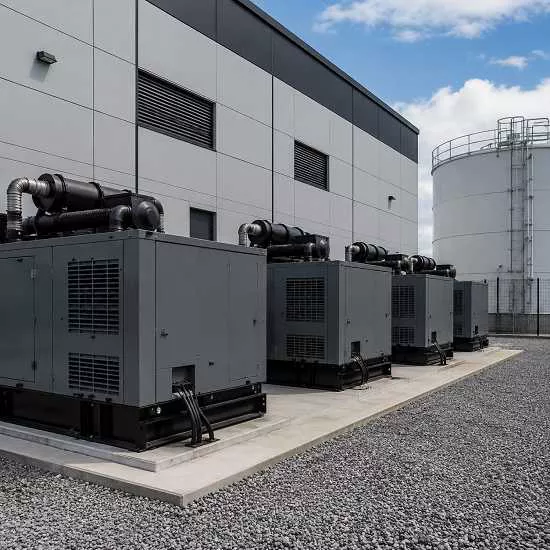
Backup diesel generators provide the first line of defense when utility power becomes unavailable. These systems are designed to start automatically within seconds of a grid failure and supply the entire facility until the main power source is restored.
In most data center designs, generators are connected to the electrical distribution system through automatic transfer switches. When the utility feed drops below a defined threshold, the system initiates generator startup and shifts the facility load from the grid to the generator supply. This process ensures that computing services continue operating without shutdown.
Diesel generators are capable of producing large amounts of power for extended periods. Large facilities may install multiple generators operating in parallel so the system can support the full data center power requirements even if one generator fails. This redundancy is essential for mission‑critical environments where downtime has financial or operational consequences.
Fuel logistics determine how long generators can sustain operations during an outage. Many data centers maintain on‑site fuel storage tanks capable of supporting several hours or even days of operation. For larger installations, fuel delivery contracts ensure that additional diesel can be supplied during prolonged grid failures.
Routine maintenance is another essential element of generator reliability. Engines must be tested regularly to verify that they start quickly, reach stable output, and synchronize with the facility’s electrical system. Periodic load testing allows operators to simulate real operating conditions and detect mechanical issues before they become critical failures.
Environmental regulations and emissions standards also shape generator system design, especially as generators remain a key part of Sources Of Energy For Data Centers operations. Modern facilities incorporate exhaust‑treatment technologies and acoustic enclosures to comply with regulatory requirements while reducing noise and minimizing environmental impact.
UPS systems ensure uninterrupted power during the short gap between utility failure and generator startup. Although generators activate quickly, they need time to reach full output. A UPS bridges that delay, keeping all IT equipment running without disruption.
This protection is vital in large data centers where thousands of servers run continuously. Even brief voltage drops or frequency fluctuations can cause system crashes or data loss. UPS systems maintain stable power during these short disturbances. By doing so, they protect critical infrastructure and keep operations running until backup generators reach full capacity.
The primary purpose of a UPS system in data centers is to maintain power during the transition from utility electricity to generator supply. Once the grid fails, the UPS immediately switches to battery power while generators start and synchronize with the electrical distribution system.
After generators reach stable output, the facility load gradually transfers from the UPS to generator power. The UPS batteries then recharge in preparation for the next potential power event. This layered approach is fundamental in environments where uninterrupted computing services are required.
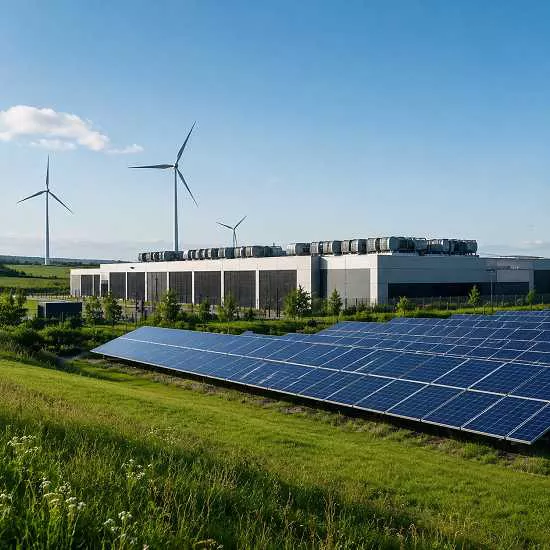
Many hyperscale data center operators incorporate renewable energy contracts or on‑site installations to reduce their environmental footprint. These energy sources help offset a portion of the Power Required For Data Center infrastructure without relying entirely on fossil fuels.
In regions with abundant sunlight or wind, renewable systems can provide a measurable share of daily electricity consumption. When integrated with energy storage technologies, they may also contribute to peak‑load reduction or support microgrid configurations.
Despite their environmental benefits, renewable sources cannot usually serve as the sole Sources Of Energy For Data Centers environments. Solar and wind output fluctuates based on weather and time of day, making them inherently variable.
Data centers require stable and predictable electricity supply at all times. As a result, renewable systems typically operate alongside grid electricity, generators, or energy storage solutions rather than replacing them entirely. This hybrid approach allows operators to improve sustainability while maintaining operational reliability.
Facilities that produce electricity locally are less vulnerable to large‑scale grid outages. If regional electrical infrastructure experiences disruption, on‑site generation systems can continue operating as long as fuel supply remains available.
For data centers with very high Data Center Power Requirements, this approach may offer greater long‑term stability. Operators can control generation capacity and align it directly with facility expansion plans.
Gas engines or turbine generators are often considered in hyperscale campuses or large enterprise data centers where electrical demand reaches tens of megawatts. In these environments, building dedicated generation infrastructure may be more efficient than relying solely on the grid.
Combined heat and power systems may also be integrated with gas generation. These systems capture waste heat from electricity production and reuse it for facility heating or absorption cooling, improving overall energy efficiency.
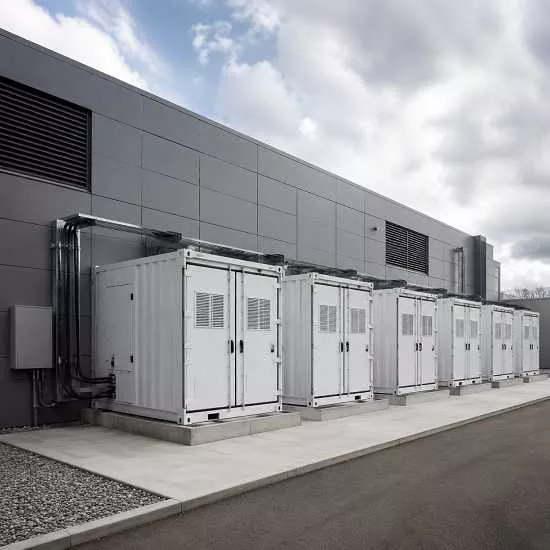
Battery Energy Storage Systems expand the role of energy storage beyond traditional UPS infrastructure. Unlike small UPS batteries that support equipment for a short period, BESS installations can store substantial amounts of electricity and release it when needed.
These systems typically use lithium‑ion or similar high‑density battery technologies arranged in large modular units. Integrated control systems manage charging cycles, power output, and safety monitoring.
BESS installations can support multiple operational goals within data center energy strategies. They can store electricity during periods of low demand, provide additional backup capacity, or stabilize the electrical load of the facility.
Peak shaving is one of the most common uses of large battery storage systems. During periods of high electricity demand, utilities may charge significantly higher energy rates. Batteries can supply part of the facility load during these periods, reducing the amount of electricity purchased from the grid.
In addition to cost optimization, BESS installations strengthen resilience within Sources Of Energy For Data Centers infrastructure. They can provide extended support during power transitions and supplement generator systems during emergencies.
As battery technology continues to improve, many operators are exploring how BESS can support more advanced energy strategies. Storage systems can interact with renewable energy installations, absorb excess solar generation, or support microgrid architectures.
For large facilities with substantial Power Required For Data Center operations, these systems provide additional flexibility in how energy is stored, distributed, and managed across the electrical infrastructure.
Microgrids are localized energy networks capable of operating independently or in coordination with the main utility grid. In a data center environment, a microgrid integrates multiple energy sources—including grid power, generators, renewable energy, and battery storage—into a single controlled system.
Instead of treating each energy source as a separate component, the microgrid coordinates them through intelligent control systems. This approach allows operators to balance supply and demand dynamically.
A microgrid controller monitors energy production, storage levels, and facility demand in real time. Based on these conditions, it determines which energy source should supply electricity at any given moment.
For example, renewable energy may power the facility when available, while batteries absorb excess generation or supply energy during short fluctuations. Generators or grid electricity can then support the remaining Data Center Power Requirements when necessary.
Microgrids allow facilities to continue operating even when the external grid becomes unavailable. By coordinating local energy resources, the system can isolate itself from wider grid disturbances and maintain stable power internally.
This capability makes microgrids an increasingly attractive option for facilities that require resilient Sources Of Energy For Data Centers operations, particularly in regions where grid reliability may vary.
Fuel cells represent an emerging approach to electricity generation for data centers. Instead of burning fuel through combustion, fuel cells generate electricity through electrochemical reactions, typically using hydrogen or natural gas.
This process produces electricity with fewer moving parts compared to traditional generators. As a result, fuel cells can operate quietly and with lower emissions.
Fuel cells convert chemical energy directly into electrical energy. When hydrogen or reformed natural gas interacts with oxygen within the fuel cell stack, the reaction produces electricity, heat, and water vapor.
For data centers, fuel cells may operate as distributed generation units that continuously produce electricity on site. In some designs, they can supply a portion of the Power Required For Data Center infrastructure while reducing reliance on conventional generators.
Opm Group has been involved in designing and supporting power infrastructure for complex technical facilities, including data centers that demand stable and resilient energy systems. Projects typically involve detailed analysis of electrical loads, redundancy strategies, and long‑term operational requirements.
Engineering teams evaluate the most suitable Sources Of Energy For Data Centers environments based on site conditions, grid reliability, and client performance objectives. This process includes designing electrical distribution architecture, integrating backup generation, and implementing power management strategies that align with the facility’s operational profile.
Opm Group’s experience also includes planning scalable infrastructure capable of supporting future expansion. As computing demand grows, data centers must increase capacity without compromising stability or efficiency. Careful planning of Power Required For Data Center systems allows facilities to expand while maintaining consistent service availability.
By combining practical engineering analysis with experience in mission‑critical infrastructure, Opm Group supports clients in building reliable and adaptable power systems for modern data center environments.
At OPM Group, we deliver comprehensive PMC tailored to ensure the successful execution of complex industrial and infrastructure projects.Our expertise spans from the bidding stage through to project completion, providing robust support at every phase.
Stay updated with the latest security trends offers by subscribing to our newsletter.
Copyright © 2025 All Rights Reserved.