
Supply chain in renewable energy projects starts with clear planning. Renewable energy developments depend on more than engineering alone. Equipment must arrive on time, suppliers must meet project requirements and teams need accurate visibility across the delivery process.
OPM Group supports developers, EPC contractors, investors and project owners with structured supply chain services for sustainable energy projects. Our approach helps clients coordinate procurement, suppliers and delivery activities with greater control, so the project can move forward with fewer disruptions and better alignment with project timelines.
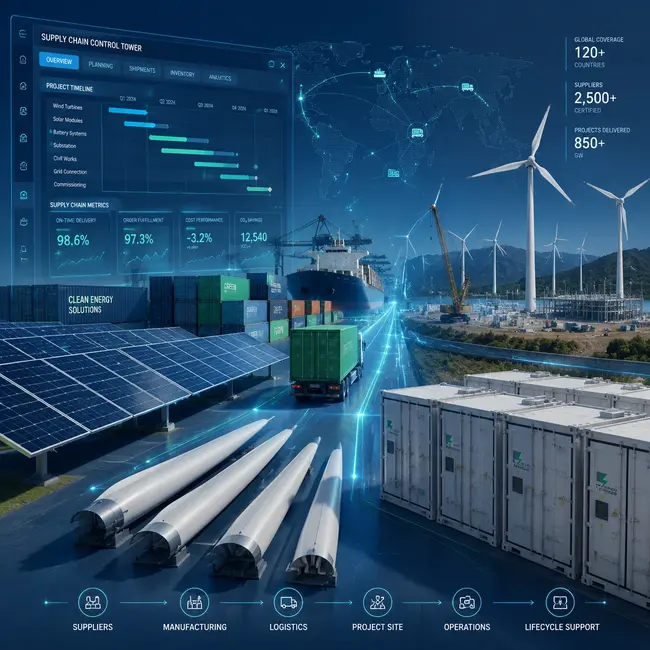
OPM Group provides structured support for supply chain management in renewable energy projects, from early planning to supplier coordination and delivery control.
A strong supply chain starts before purchase orders are issued. At this stage, OPM Group helps clients review the project scope, technical requirements, installation sequence, budget limits and delivery deadlines. This creates a realistic procurement roadmap instead of a reactive buying process.
Strategic planning includes identifying critical components, estimating lead times, mapping supplier options and reviewing logistics constraints. For example, transformers, inverters, wind turbine parts, or battery storage systems may require early ordering because production and delivery can take months. If these items are not planned in advance, the project may face delays that are difficult to recover.
OPM Group also helps project teams define priorities. Some items require strict technical compliance, while others may allow more supplier flexibility. This distinction helps clients spend time and negotiation effort where it matters most. The result is a procurement plan that supports the schedule, budget and technical performance of the project.
Choosing suppliers for renewable energy projects should go beyond price comparison. A low-cost offer can create serious problems if the supplier cannot meet delivery dates, technical standards, documentation needs, or warranty terms.
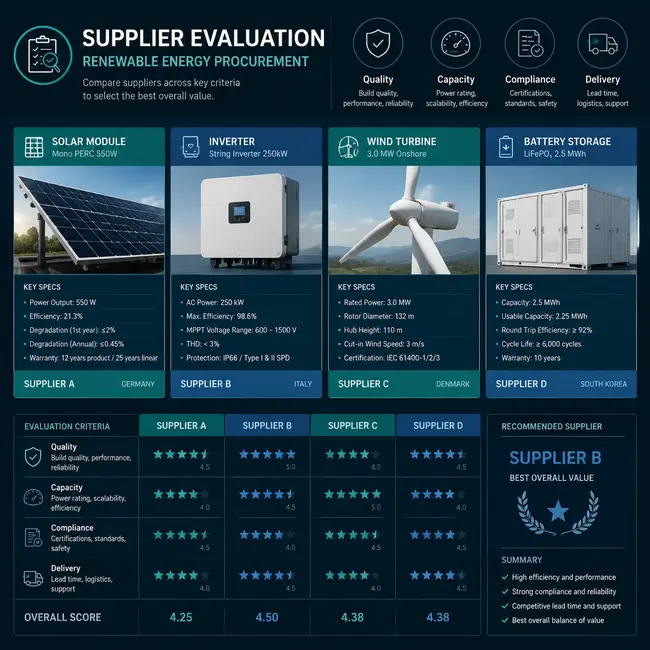
OPM Group evaluates vendors based on quality, production capacity, compliance records, delivery performance and after-sales support. This careful process strengthens the supply chain in renewable energy projects by reducing supplier-related risks before major purchases are made.
Renewable energy projects often rely on global sourcing and local delivery at the same time. This can create risks such as shipping delays, customs issues, supplier limits and local site constraints. OPM Group helps clients identify these risks early and prepare practical response measures.
Our approach to supply chain management in renewable energy projects includes visibility across sourcing, transport, approvals and site delivery. We also help address local issues such as access, storage and installation readiness so that materials arrive in line with actual project conditions.
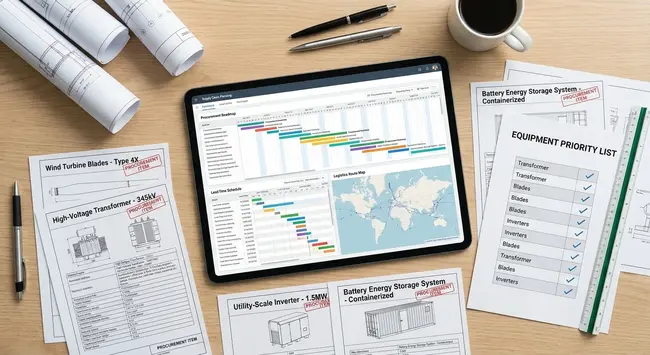
Procurement management for renewable energy equipment covers sourcing, negotiation, purchasing and order tracking. It may include solar modules, inverters, wind turbine components, cables, mounting structures, transformers, switchgear, battery systems, monitoring devices and spare parts.
A clear procurement process helps define what must be purchased, when each item is needed and which components may affect the project schedule. It also supports better comparison of supplier offers, delivery terms, warranty conditions, inspection requirements and technical documents.
In supply chain in renewable energy projects, early procurement planning reduces the risk of late orders, unclear responsibilities, missing documents and delivery issues during construction or installation.
Many renewable energy components are large, heavy, fragile, or high in value. For that reason, logistics planning must cover transport method, packaging, customs documents, port handling, insurance and final delivery to site. Even when equipment is manufactured on time, poor shipping coordination can still delay the project.
As part of supply chain management in renewable energy projects, logistics coordination should also consider site readiness, access roads, unloading conditions, storage space, and special permits for oversized cargo. This helps materials arrive in a sequence that supports installation rather than interrupts it.
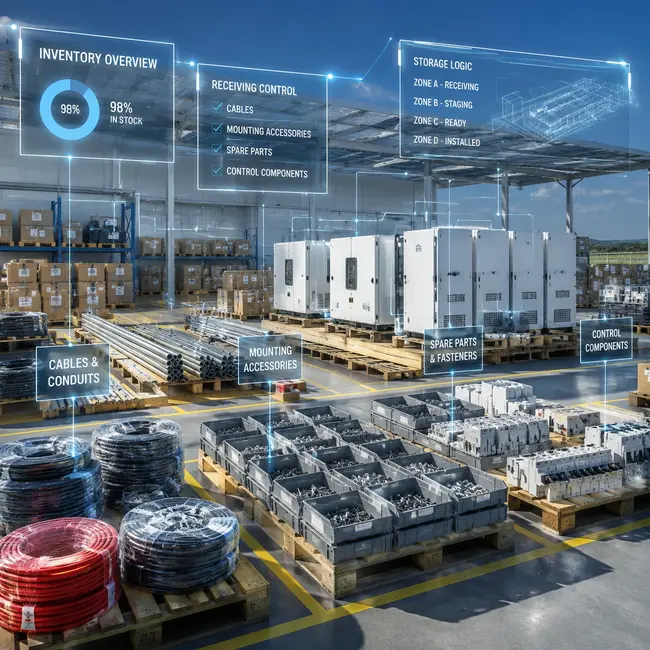
Inventory planning helps make sure materials are available when installation teams need them. It also reduces site congestion, misplaced items, damage and unnecessary storage costs. In renewable energy projects, poor inventory control can slow down work even after major equipment has arrived.
A clear inventory plan defines what should be delivered, when it should reach the site, where it should be stored and how it should be tracked. This includes major components, small installation materials, spare parts and consumables. Proper receiving, storage and issue control also help teams detect shortages early and reduce material loss on site.
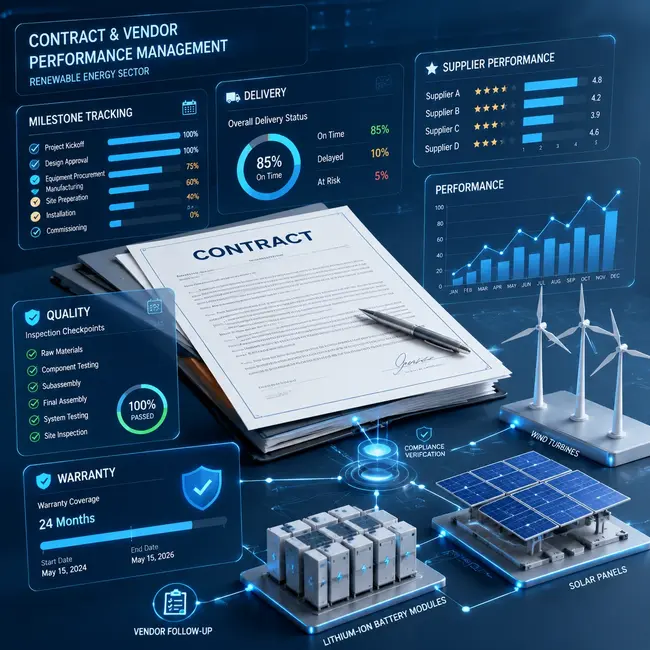
Supplier contracts need active follow-up after signing. Delivery dates, quality standards, required documents, inspection stages and warranty terms should be monitored throughout the project. Without this control, small issues can turn into delays, claims, or installation problems.
Vendor performance management includes progress tracking, issue reporting, document review, delivery confirmation and supplier evaluation. When a vendor falls behind schedule or misses key requirements, early action helps limit the effect on the wider project. This also gives companies better insight for future supplier decisions.
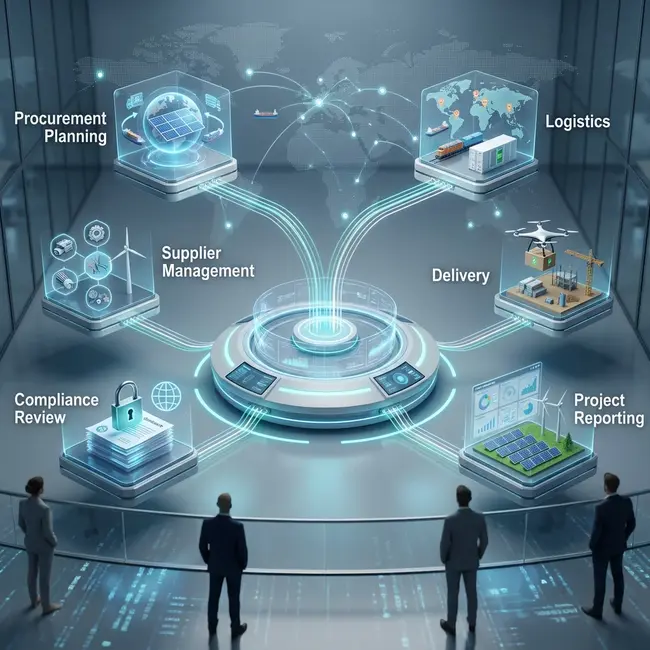
Different renewable energy projects require different supply chain strategies. OPM Group adapts its services to the technology, scale, location and delivery model of each project. We help clients understand which components are most critical, which suppliers need early engagement and which logistics risks should be controlled before procurement begins.
This tailored approach is essential for supply chain in renewable energy projects because a standard purchasing process cannot cover every technical and operational condition.
Solar energy projects often require high-volume procurement and careful delivery planning. Panels, inverters, mounting structures, cables, connectors, transformers and monitoring systems must arrive in the right sequence to support installation. If one package is delayed, site progress can slow down even when other materials are already available.
Effective supply chain management in renewable energy projects helps solar teams align purchasing, delivery schedules and site activity. It also improves control over long lead-time items, technical documents, approvals and commissioning requirements. For utility-scale solar farms, phased deliveries can reduce storage pressure and support smoother work across different construction areas.
Wind energy projects need close coordination because many components are large, heavy and difficult to move. Blades, nacelles, towers, transformers and control systems often require special transport, route checks, lifting equipment and precise delivery timing. If one major item is delayed, installation work can be disrupted across the site.
These projects also face practical risks linked to port handling, road access, weather windows, crane availability and site readiness. Because large wind components are not easy to replace quickly, supplier reliability, inspection planning and delivery control are critical. Strong follow-up helps reduce damage, avoid delays and keep installation sequences on track.
Energy storage projects have specific requirements linked to safety, compliance, technical integration and delivery control. Battery containers, power conversion systems, thermal equipment, control systems and fire protection components must be sourced and delivered with close attention to technical details. Errors in specification, packaging, or handling can create serious problems during installation and commissioning.
These systems may also involve transport restrictions, special packaging rules and strict handling procedures. Such issues should be reviewed before shipment begins, not after equipment is already in transit. A structured process helps reduce safety risks, avoid compliance issues and support smoother delivery to site.
Hybrid renewable energy projects combine technologies such as solar, wind, battery storage and sometimes backup generation or grid support systems. This increases complexity because each equipment package may come from different suppliers, follow different standards and arrive on different timelines.
Strong supply chain management in renewable energy projects helps keep these packages aligned with technical integration and the construction schedule. For example, battery systems may need to be available before commissioning, while transformers and control systems must support the full hybrid design from day one. Early planning reduces the risk that a delay in one package will disrupt the performance and completion of the whole system.
Material shortages can stop site progress even when the main equipment has already arrived. Missing cables, connectors, mounting accessories, spare parts, or control components may delay installation, testing, or commissioning. Strong planning for the supply chain in renewable energy projects helps identify these smaller but essential items before they become site problems.
Delivery tracking is also important. If a delay appears likely, the project team can review alternatives, adjust the schedule, or prioritize critical materials. Regular communication and accurate records help teams act based on clear information, not assumptions.
Renewable energy projects can be affected by price changes in steel, copper, lithium, electronic components, transport and currency exchange. Long lead-time items can also create scheduling pressure if they are ordered too late. OPM Group helps clients reduce these risks through early market review and procurement planning.
For high-value or time-sensitive components, we help compare supplier offers, review delivery commitments and identify the best time to place orders. This does not guarantee fixed market prices, but it gives the project team better control over exposure.
Long lead-time components should be tracked separately because they often define the project’s critical path. Transformers, inverters, wind turbine parts and battery systems may require special attention from the first planning stage.
Renewable energy projects must meet technical, safety, environmental and grid-related standards. If equipment does not comply, the project may face approval delays, commissioning issues, or warranty disputes. Strong supply chain management in renewable energy projects helps teams address compliance requirements before they create problems later in the project.
This includes checking supplier documents, certificates, test reports, warranty terms and technical specifications. Required documents should be available before shipment, customs clearance, installation and handover. Compliance should not be treated as a final-stage task, because missing or incomplete documentation after delivery can cause avoidable delays.
Large-scale projects involve high investment, numerous procurement packages and tight coordination between engineering, construction and commercial teams. A delay in one critical package can affect financing milestones, contractor schedules and grid connection plans. Managing the supply chain in renewable energy projects at this scale requires structuring procurement priorities and aligning deliveries with specific construction phases.
Large developments also require strong reporting and transparency. Stakeholders need clear updates on what has been ordered, what is in production, what is in transit and which items pose a potential risk. Organizing this information effectively creates better visibility for decision-makers and reduces the chance of last-minute surprises or site disruptions.
Many renewable energy projects source equipment from several countries. This can improve access to technology and pricing, but it also increases complexity. Different suppliers may have different lead times, documentation standards, payment terms, shipping routes and communication practices.
Effective supply chain management in renewable energy projects gives teams a clear view of responsibilities, delivery dates, document requirements and risk points. It also supports better control of customs, Incoterms, inspection arrangements and shipping documents. If these details are not managed in time, delays can occur even after equipment is ready for dispatch.
Some projects need support after problems have already appeared. These issues may include delayed equipment, rising costs, supplier disputes, missing documents, poor communication, or materials arriving out of sequence. In these cases, the first step is to review the situation clearly, identify the cause and define practical recovery actions.
A recovery plan may involve supplier escalation, revised delivery priorities, alternative sourcing, logistics changes, or better reporting. The right response depends on the project stage and the seriousness of the issue. Quick action is important because procurement and delivery problems often become harder to solve as the project moves closer to installation or commissioning.
Starting a renewable energy project with a clear supply chain strategy gives your team a stronger foundation. Before procurement begins, OPM Group can help review your project requirements, identify critical components, assess supplier options and build a practical roadmap for delivery.
Our consultation process focuses on real project needs. We look at the technology, location, schedule, budget, procurement packages, logistics routes and main risks. This allows us to recommend a supply chain approach that fits the project instead of applying a generic process.
The next step is building a practical roadmap for procurement and delivery. This may include supplier shortlisting, tender support, procurement scheduling, logistics planning, risk tracking, document control and vendor performance management. Each part of the roadmap is designed to help the project team make decisions with better information.
If you need tailored support for supply chain in renewable energy projects, OPM Group is ready to help. Contact our team to discuss your project, review your current challenges and define the right supply chain strategy for successful renewable energy delivery.
At OPM Group, we deliver comprehensive PMC tailored to ensure the successful execution of complex industrial and infrastructure projects.Our expertise spans from the bidding stage through to project completion, providing robust support at every phase.
Stay updated with the latest security trends offers by subscribing to our newsletter.
Copyright © 2025 All Rights Reserved.