
Energy infrastructure has shaped the development of modern society, enabling economic growth, technological advancement and environmental management. Among the many projects undertaken worldwide, a few stand out as truly transformative, providing long-term, reliable energy while setting benchmarks for engineering, sustainability and international collaboration. This article examines some of the most successful energy projects, exploring their scale, technological innovation and impact on both local and global communities. By analyzing these energy project case studies, readers can understand how careful planning, engineering excellence and strategic execution contribute to energy systems that are not only effective but also sustainable for decades. From massive hydroelectric dams to pioneering renewable and storage technologies, these projects illustrate the potential of human ingenuity in shaping the energy landscape.

The Three Gorges Dam, located on the Yangtze River, is widely recognized as one of the most ambitious successful energy projects in history. Construction began in 1994 and concluded in 2012, spanning nearly two decades. Designed to provide large-scale hydroelectric power, the dam also plays a role in flood control and navigation improvement. Its scale required advanced engineering solutions to address geological challenges, sediment management and environmental concerns. Beyond electricity production, the project reshaped regional infrastructure and enabled the development of local industries, demonstrating how a single energy project can integrate multiple strategic objectives.
The Three Gorges Dam has an installed capacity of 22.5 gigawatts, making it the largest hydroelectric facility in the world. It produces over 100 terawatt-hours annually, supplying clean energy to millions of households. The dam’s energy output is highly stable, providing a reliable source of renewable electricity for both industrial and domestic use. Its scale sets a benchmark for energy project case studies aiming for sustainable, high-capacity energy generation.
The economic impact of the dam includes job creation during construction and ongoing operational support. It has reduced China’s reliance on coal, significantly cutting greenhouse gas emissions. Environmentally, it has required careful ecosystem management, including fish migration programs and sediment control measures. The balance between large-scale power generation and ecological protection makes it a critical case for other successful energy projects worldwide.
The Itaipu Dam, a joint initiative between Brazil and Paraguay, is another exemplary hydroelectric project. Completed in 1984, it was designed to meet growing regional energy demand. Itaipu represents a model of cross-border collaboration in energy infrastructure, combining technical expertise, political negotiation and environmental planning. The project demonstrates that successful energy projects can be achieved through multinational cooperation and careful long-term planning.
Itaipu has an installed capacity of 14 gigawatts and regularly produces around 90 terawatt-hours annually. The dam provides almost 75% of Paraguay’s electricity needs and 15% of Brazil’s, illustrating how a single energy project case study can support multiple nations’ energy security simultaneously.
The governance of Itaipu involves both countries through a bi-national entity, ensuring shared responsibility for operation and maintenance. The collaboration extends to environmental monitoring, social development programs and technological upgrades, serving as a benchmark for international cooperation in large-scale energy initiatives.
The Kashiwazaki-Kariwa Nuclear Power Plant is one of the largest nuclear facilities globally. Located in Niigata Prefecture, it uses advanced boiling water reactors to supply stable electricity to Japan. As a nuclear energy facility, it highlights how these types of projects can combine cutting-edge technology with strict regulatory compliance to ensure both safety and reliability.
The plant has a total output capacity of 7.96 gigawatts, sufficient to power millions of homes. Nuclear energy provides consistent base-load electricity, complementing variable renewable sources. Its performance demonstrates the potential of nuclear facilities as key components in comprehensive energy strategies.
Kashiwazaki-Kariwa integrates advanced seismic protection systems, automated monitoring and redundancy in critical components. These innovations have improved operational safety and efficiency, making it a prominent example in energy project case studies focusing on high-tech and risk-managed energy production.
Constructed during the Great Depression, the Hoover Dam was completed in 1936 and remains a landmark of American engineering. Beyond hydroelectric power, it transformed water management in the Colorado River Basin. The project combined massive concrete engineering, workforce mobilization and innovative construction techniques, setting a precedent for future successful energy projects worldwide.
The Hoover Dam generates over 4 gigawatts of electricity, distributed across multiple U.S. states. Its long operational life demonstrates the durability of large-scale hydroelectric systems and their role in regional energy planning. Its success illustrates how infrastructure projects can integrate energy generation with water management.
Beyond electricity, the dam supports irrigation, flood control and tourism, directly influencing regional economic growth. The multipurpose nature of the Hoover Dam highlights the holistic impact a single energy project case study can have on both society and the economy.
The London Array is one of the world’s largest offshore wind farms, located in the Thames Estuary. Commissioned in 2013, it demonstrates how wind power can be deployed at scale while integrating environmental management, technological precision and grid connectivity. It serves as a model for successful energy projects in renewable sectors.
With a capacity of 630 megawatts, the London Array supplies clean energy to over half a million homes. Its design minimizes downtime and maximizes efficiency through predictive maintenance systems, showcasing the practical application of large-scale offshore wind technology.
The project reduces carbon emissions significantly and incorporates wildlife monitoring to mitigate ecological impacts. By combining high output with environmental stewardship, it sets a benchmark in energy project case studies for sustainable renewable energy deployment.
Solar Star, located in California, is among the largest photovoltaic solar projects globally. It emphasizes high-efficiency panel deployment, innovative land use and grid integration, providing insight into the evolving landscape of successful energy projects in solar energy.
With a combined capacity of 579 megawatts, Solar Star produces more than 1.7 terawatt-hours annually, supplying renewable energy to tens of thousands of homes. Its scale demonstrates how solar can be economically viable and impactful at a commercial level.
By reducing reliance on fossil fuels, Solar Star encourages further investment in solar infrastructure. It exemplifies how a well-executed energy project case study can drive broader adoption of renewable technologies regionally and nationally.
Tesla’s Powerwall batteries, produced at the Gigafactory, provide large-scale energy storage solutions that complement renewable generation. By storing electricity from solar and wind sources, Tesla enables consistent energy supply, enhancing the reliability of decentralized energy systems.
The Gigafactory produces gigawatt-hours of lithium-ion batteries annually, supporting both residential and commercial energy storage. The scale and efficiency of production make it a critical component in modern projects of this kind that rely on storage solutions.
Tesla’s energy storage systems allow excess renewable energy to be saved and dispatched when demand peaks, stabilizing the grid. This integration illustrates a new generation of energy project case studies where storage is as vital as generation for achieving sustainability goals.
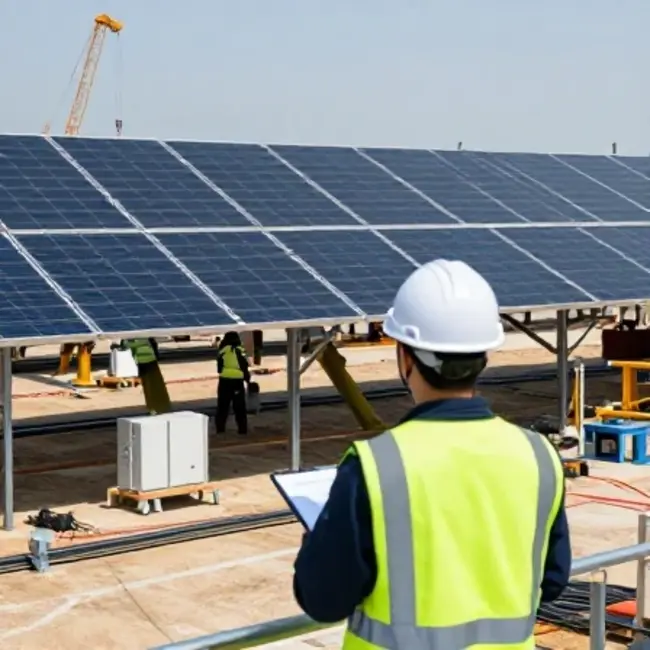
At OPM, our team combines expert human resources with advanced technical infrastructure in energy project management. We are dedicated to guiding your projects to success, ensuring they stand out as some of the most successful energy projects in history. Partner with us to transform your vision into a landmark achievement.
For more information about how OPM can manage and execute your projects, please contact us at the numbers below.
Canada phone number: 0014372887491
Germany phone number: 004917680678446
At OPM Group, we deliver comprehensive PMC tailored to ensure the successful execution of complex industrial and infrastructure projects.Our expertise spans from the bidding stage through to project completion, providing robust support at every phase.
Stay updated with the latest security trends offers by subscribing to our newsletter.
Copyright © 2025 All Rights Reserved.