
Digital twins in construction refer to dynamic digital replicas of physical assets, processes, or entire construction projects that are continuously updated using real-time data. Unlike static digital models, a digital twin reflects what is actually happening on site at any given moment. This includes geometry, materials, schedules, costs, equipment status and environmental conditions.
The core concept is built on the integration of design data, construction plans and operational inputs such as IoT sensors, progress reports and field data. As a result, project managers gain a single, reliable source of truth that mirrors real-world conditions. This allows decisions to be based on verified data rather than assumptions or delayed reports.
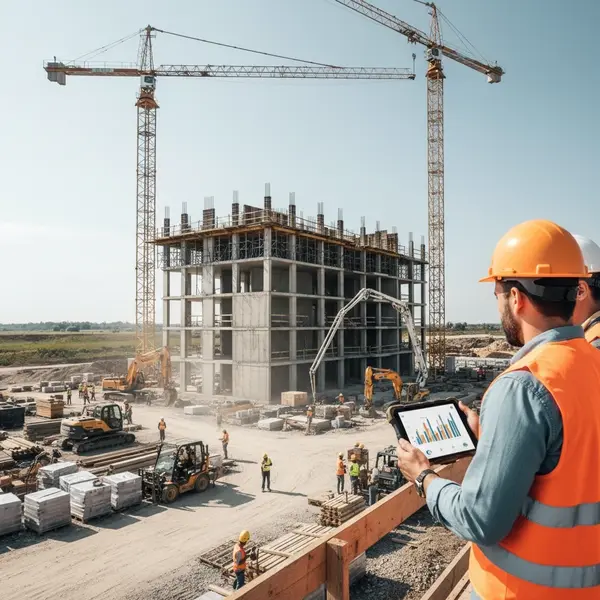
Traditional BIM models primarily represent design intent. They are usually updated at specific milestones and often stop evolving once construction begins. Digital twins, by contrast, remain active throughout the entire project lifecycle.
The evolving role of construction digital twins technology is shaping fully connected project ecosystems, where planning, execution and operations are unified within a single, intelligent management framework.
Another distinction is predictability. Digital twins in construction support simulations and “what-if” scenarios based on current site conditions. This capability allows construction managers to forecast delays, cost overruns, or performance issues with a higher level of accuracy than traditional BIM environments.
In the planning phase, digital twins support feasibility analysis by combining historical project data with site-specific inputs. Factors such as access constraints, logistics routes, weather patterns and resource availability can be analyzed before physical work begins.
Data-driven site analysis enables planners to test multiple development strategies virtually. For example, construction sequencing can be adjusted in the digital environment to identify bottlenecks or clashes long before they affect the schedule. This reduces uncertainty during early decision-making and supports more realistic budgeting and timelines.
Risk assessment becomes more precise when digital twins in construction are used to simulate alternative scenarios. Changes in material supply, labor availability, or site conditions can be tested without disrupting the actual project.
By running these simulations early, project teams can quantify the impact of risks instead of relying on qualitative judgment. This allows mitigation strategies to be embedded into the project plan from the outset, improving overall resilience and reducing reactive decision-making during execution.
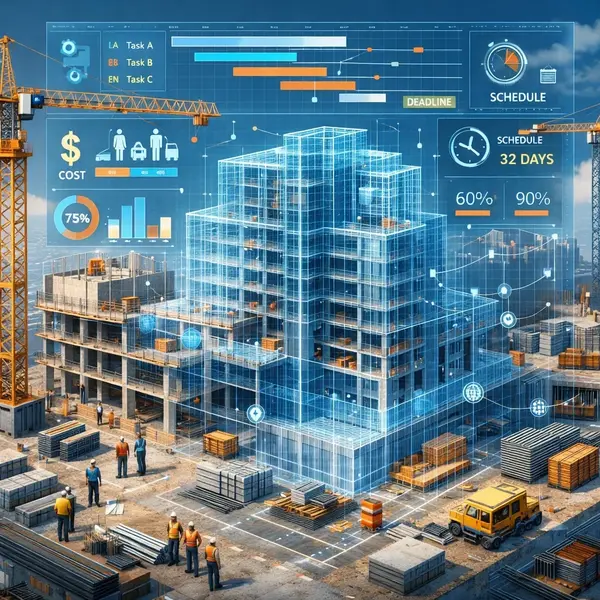
Construction Digital twins technology improve scheduling accuracy by linking the construction program directly to site conditions and resource data. Schedules are no longer static documents but adaptive tools that evolve as the project progresses.
This approach allows managers to identify sequencing conflicts early and adjust workflows before delays accumulate.
The same data-driven logic applies to resource planning. Labor, equipment and materials are allocated based on real-time needs rather than assumptions, reducing idle time and cost inefficiencies.
During execution, digital twins serve as a live control system for construction operations. Site data feeds into the model continuously, providing up-to-date visibility into progress, quality and compliance.
Managers can track activities at a granular level and intervene promptly when deviations occur.
Quality control is also strengthened. Inspections, test results and compliance records are linked directly to specific elements within the digital twin, ensuring traceability and accountability throughout execution.
Performance tracking compares planned progress with actual site conditions in near real time. This makes deviations visible early, when corrective actions are still cost-effective.
After project completion, digital twins in construction continue to deliver value by supporting operations and maintenance. Facility managers gain access to a comprehensive digital representation of assets, systems and maintenance histories.
This reduces reliance on fragmented documentation and, through construction digital twins technology, significantly improves response times during maintenance activities.
Predictive maintenance uses operational data within the digital twin to anticipate failures before they occur. Maintenance activities can be planned based on actual asset condition rather than fixed schedules, extending asset life and reducing operational costs.
Implementing digital twins requires careful planning and organizational alignment. The following challenges must be addressed to achieve meaningful results:
OPM Group applies construction digital twins technology as a strategic management tool rather than a standalone technology, aligning advanced capabilities with project objectives, governance structures and real‑world operational conditions.
As a project management company, OPM Group has the capability to implement and utilize digital twins across all oil & gas and data center projects. These digital twins are integrated into our planning, execution and control processes to support effective, data-driven project management throughout the project lifecycle.
For information regarding project acceptance conditions:
OPM Group adopts a management‑driven approach to digital twin implementation, positioning it as a framework that guides decision‑making rather than a standalone tool. Implementation begins at the planning stage, where project objectives, risk profiles and performance indicators are defined and embedded into the digital twin structure. This alignment ensures that the model reflects management priorities, not just technical data.
During execution, OPM Group connects site data, progress reports and scheduling updates directly to the digital twin. This creates a live management environment where deviations from the plan are visible in context, allowing corrective actions to be taken based on verified information. Decision-making is supported by scenario analysis, enabling project leaders to evaluate alternatives before committing resources.
OPM Group delivers value by embedding digital twins within established project management methodologies rather than replacing them. Schedules, budgets and risk registers are connected to the digital twin, creating a unified system where management data and physical progress remain synchronized.
Measurable performance outcomes are achieved by linking key performance indicators to real-time project data. Productivity, cost efficiency and quality metrics can be evaluated objectively throughout the project lifecycle. As a result, clients gain clearer visibility, more reliable control and documented evidence of performance improvements across planning, execution and delivery phases.
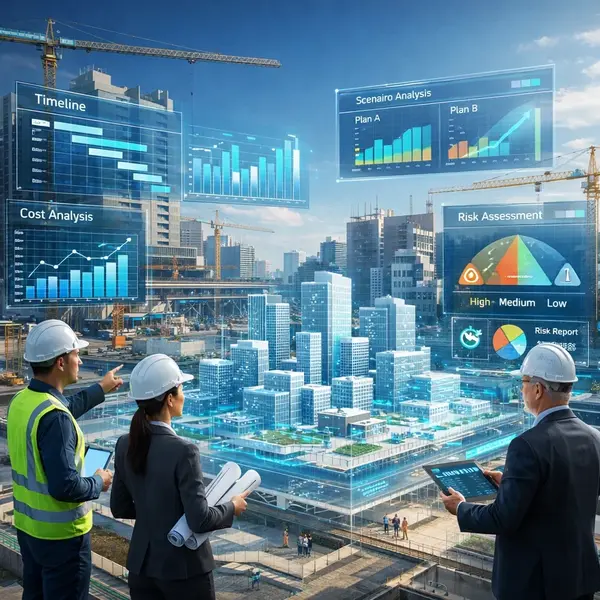
Ongoing advancements in data‑driven technologies are set to shape the future of digital twin–based practices across the construction sector. Integration with artificial intelligence, IoT and advanced analytics will further enhance predictive capabilities.
AI-driven analysis will enable digital twins to identify patterns and recommend actions automatically. IoT devices will continue to enrich models with real-time data from the field.
The advancement of construction digital twins technology is driving the shift toward fully connected project ecosystems that integrate planning, execution and operational management.
At OPM Group, we deliver comprehensive PMC tailored to ensure the successful execution of complex industrial and infrastructure projects.Our expertise spans from the bidding stage through to project completion, providing robust support at every phase.
Stay updated with the latest security trends offers by subscribing to our newsletter.
Copyright © 2025 All Rights Reserved.