
Storage tank projects exist to control risk, continuity, and material quality within industrial operations. In environments where liquids and fuels move between production, processing, and consumption stages, operational variability is absorbed within controlled systems. They allow facilities to disconnect supply schedules from consumption rates while keeping materials within defined safety limits. Industries that rely on industrial this projects usually work with materials that cannot be produced and consumed at the same pace. Oil and gas operations need tanks to separate extraction, transportation, and refining cycles. Power generation facilities depend on stored fuel to maintain output during supply interruptions. Data centers use tanks to protect uptime through emergency power and fire protection systems. Building construction integrates storage tanks into water supply and firefighting infrastructure. Across these sectors, tanks function as controlled buffers rather than simple containers, which explains why the selection of types of storage tanks directly affects operational stability.
The design and structural configuration of a storage tank determines how it behaves under load, how it is maintained, and where it can be installed. These types of tanks are chosen based on volume demands, available space, and material characteristics.
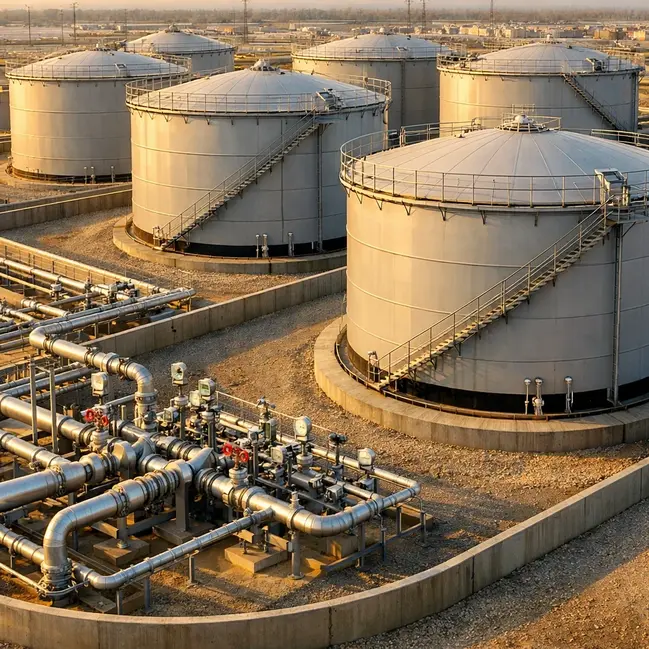
This projects are designed to manage high volumes under changing temperature and filling conditions. These tanks usually employ vertical cylindrical designs with corrosion protection systems, robust foundations, and perimeter containment. Engineering considerations include roof movement, settlement tolerance, and interface with pipeline networks. The objective is to stabilize upstream production while providing controlled feedstock availability for downstream processes.
Refined petroleum storage tanks handle fuels with strict quality and volatility requirements. These projects focus on vapor control, segregation, and accurate level measurement. Tank selection depends on turnover rate, emission limits, and local codes. floating roof or fixed roof configurations are applied to reduce losses and maintain product specifications throughout storage cycles.
Chemical and additive tanks support blending and process optimization in oil and gas facilities. These tanks must maintain compatibility with aggressive or sensitive substances. Material selection, internal linings, and temperature controls are defined during early design stages to prevent reactions that could affect downstream product quality. These are specialized types of tank projects with low tolerance for design error.
Storage tank projects in power facilities are driven by reliability requirements. Fuel tanks for power generation must support defined runtime periods during peak demand or grid outages. Capacity calculations are based on fuel consumption rates and refueling accessibility rather than maximum possible volume. Tanks are typically integrated with filtration, heating, and monitoring systems to maintain fuel usability over long standby periods.
Backup energy solutions address redundancy and emergency operation. Separate tanks or isolated compartments often serve black-start generators and auxiliary systems. Design priorities include fire separation, leak detection, and rapid fuel transfer. A failure in these tanks directly affects power availability, which is why engineering accuracy matters more than storage size.
Fuel tanks are a critical component of data center resilience strategies. These tanks supply diesel generators when utility power fails. Project design focuses on redundancy, automated monitoring, and uninterrupted fuel delivery. Space limitations and environmental constraints often influence tank configuration.
This type of project serve cooling systems and fire suppression networks. Tank capacity is calculated based on thermal loads and code-defined discharge requirements. Coatings and materials are selected to resist corrosion and biological growth. These tanks must perform consistently during continuous operation and deliver instantly during emergency events.
Water storage tank in construction projects regulate pressure and protect occupants from supply disruptions. Design decisions depend on building height, occupancy patterns, and municipal infrastructure reliability. Underground and rooftop tanks are placed to balance structural loads with service efficiency. Proper sizing prevents pressure instability and pump cycling issues.

Firefighting tanks are designed to meet specific flow rates and reserve durations. These tanks integrate with fire pumps, sprinklers, and hydrant systems. Accessibility, redundancy, and protection from contamination are central to design. Performance during emergency conditions defines success more than aesthetics or storage capacity.
Material selection determines durability, maintenance frequency, and operational risk. Carbon steel tanks are widely used for heavy-duty applications involving fuels and bulk liquids. With appropriate coatings and corrosion protection, carbon steel provides structural strength and predictable lifecycle behavior at controlled cost.
Stainless steel tanks are selected for corrosive environments or processes requiring material purity. They resist chemical attack and tolerate frequent cleaning without degradation. These advantages justify their use in chemical processing and sensitive industrial applications despite higher initial cost.

Engineering standards define acceptable practices throughout about this. Compliance with API, ASME, and NFPA standards governs design loads, welding methods, inspection procedures, and testing. These standards reduce uncertainty by defining performance expectations under normal and fault conditions.
Environmental protection measures address spill containment and early leak detection. Secondary containment structures, impermeable foundations, and monitoring systems limit environmental exposure. These controls protect surrounding infrastructure and support regulatory compliance over the entire operating life of the tank.
OPM Group operates as a project management company delivering this across oil and gas, energy, data centers, and building construction. Our role focuses on coordination, risk control, and execution rather than equipment supply. We align engineering, procurement, and construction activities with operational objectives.
Our experience covers custom design and execution strategies tailored to site conditions, regulatory environments, and operational priorities. By managing different types of storage tank projects as components of larger systems, OPM Group supports efficient delivery of complex industrial projects involving diverse types of tank projects.
At OPM Group, we deliver comprehensive PMC tailored to ensure the successful execution of complex industrial and infrastructure projects.Our expertise spans from the bidding stage through to project completion, providing robust support at every phase.
Stay updated with the latest security trends offers by subscribing to our newsletter.
Copyright © 2025 All Rights Reserved.